Product Strategy
Telegram Mini App or Mobile App: What Should a Business Choose?
A practical comparison of launch speed, ownership cost, retention, payments, and platform limits without a one-size-fits-all answer.
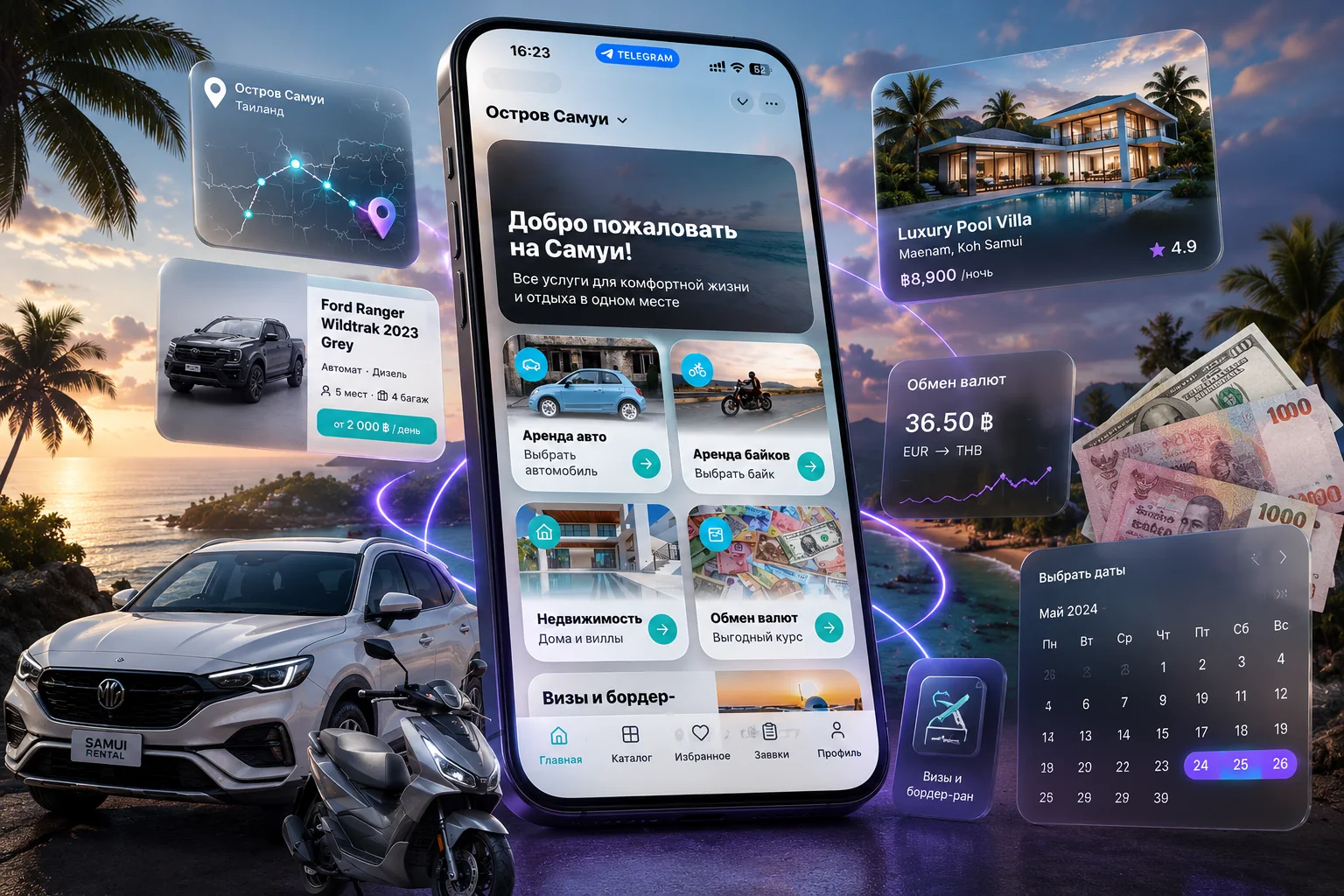
Businesses now face a practical product choice: build a full iOS and Android application or launch the service inside Telegram. The interfaces may look similar, but acquisition, retention, analytics, and long-term ownership work very differently.
A Telegram Mini App is not simply a cheaper mobile app, and a mobile app is not automatically the more serious option. They are different product channels with different economics.
Start with usage frequency, acquisition channel, and required device capabilities. Choose technology only after those questions are answered.
What a Telegram Mini App really is
A Mini App is a web application opened inside Telegram. A user can arrive from a bot, channel, advertisement, or message and immediately access a catalog, booking flow, customer account, loyalty program, or order form.
- no app-store installation
- fast entry from a link
- bot and notification integration
- payment support
- updates without store review
- mobile and desktop access
When a Mini App is the stronger choice
Mini Apps work especially well for occasional and focused workflows: bookings, promotions, small catalogs, event registration, loyalty cards, and community tools. They are also effective for validating a new business hypothesis before a larger investment.
- the audience already uses Telegram
- speed to MVP matters
- the workflow is short
- native background features are unnecessary
- updates must ship frequently
- demand still needs validation
The limitations of Telegram
The product remains dependent on Telegram navigation, web-platform capabilities, and changing platform rules. Some device features are limited, and the service does not occupy the home screen as naturally as an installed application.
When a mobile app is stronger
A full application is usually stronger when the product must become a frequent part of customer life. Banking, delivery, fitness, healthcare, transport, education, marketplaces, and internal tools often need deeper control over interaction and device capabilities.
- frequent or daily use
- push and personalization
- camera, location, or Bluetooth
- partial offline operation
- complex payment and account flows
- app-store discovery
Cost and timeline
A focused Mini App can often launch in 4–10 weeks. A mobile MVP more commonly takes 8–16 weeks, particularly with payments, maps, notifications, authentication, and backend integrations. Initial cost alone is not enough: acquisition, retention, revenue per customer, and twelve-month ownership matter more.
A simple decision matrix
- Short occasional workflow plus Telegram audience → Mini App
- Frequent use and retention → mobile app
- Fast demand validation → Mini App
- Native device capabilities → mobile app
- Community or internal workflow → Mini App or web
- Primary sales channel → usually mobile app
The hybrid route
A new product can begin as a Mini App, collect evidence about demand and behavior, and later evolve into a full application. This works best when business logic, APIs, and customer data are designed independently from the Telegram interface.
Questions to answer before development
- How will users discover the product?
- How often should they return?
- What must happen in the first 60 seconds?
- Which device capabilities are required?
- Is offline operation necessary?
- How will the product create value?
- What should the first release prove?
The best format is not the one with more features. It is the one that removes the most friction between customer need and useful outcome.
Choose a Mini App for a focused workflow and an existing Telegram channel. Invest in a mobile application when the product must become a habit, use device capabilities, and retain customers for years. If the answer is unclear, prototype both paths before committing to engineering.